
Seasonal Jobs: Where Short-Term Work Can Really Pay Off
Anúncios
Seasonal jobs open up every year when stores, warehouses and resorts need extra hands to get through their busiest weeks.
These roles often come with flexible schedules, hourly pay and quick hiring, which may suit students, retirees and career changers.
Below, you will see how seasonal work tends to function, what employers usually ask for and how to apply well.
- Job type: temporary full-time or part-time roles tied to peak seasons.
- Common sectors: retail, warehouse and logistics, hospitality, tax prep and outdoor recreation.
- Typical length: from a few weeks to several months, depending on the employer.
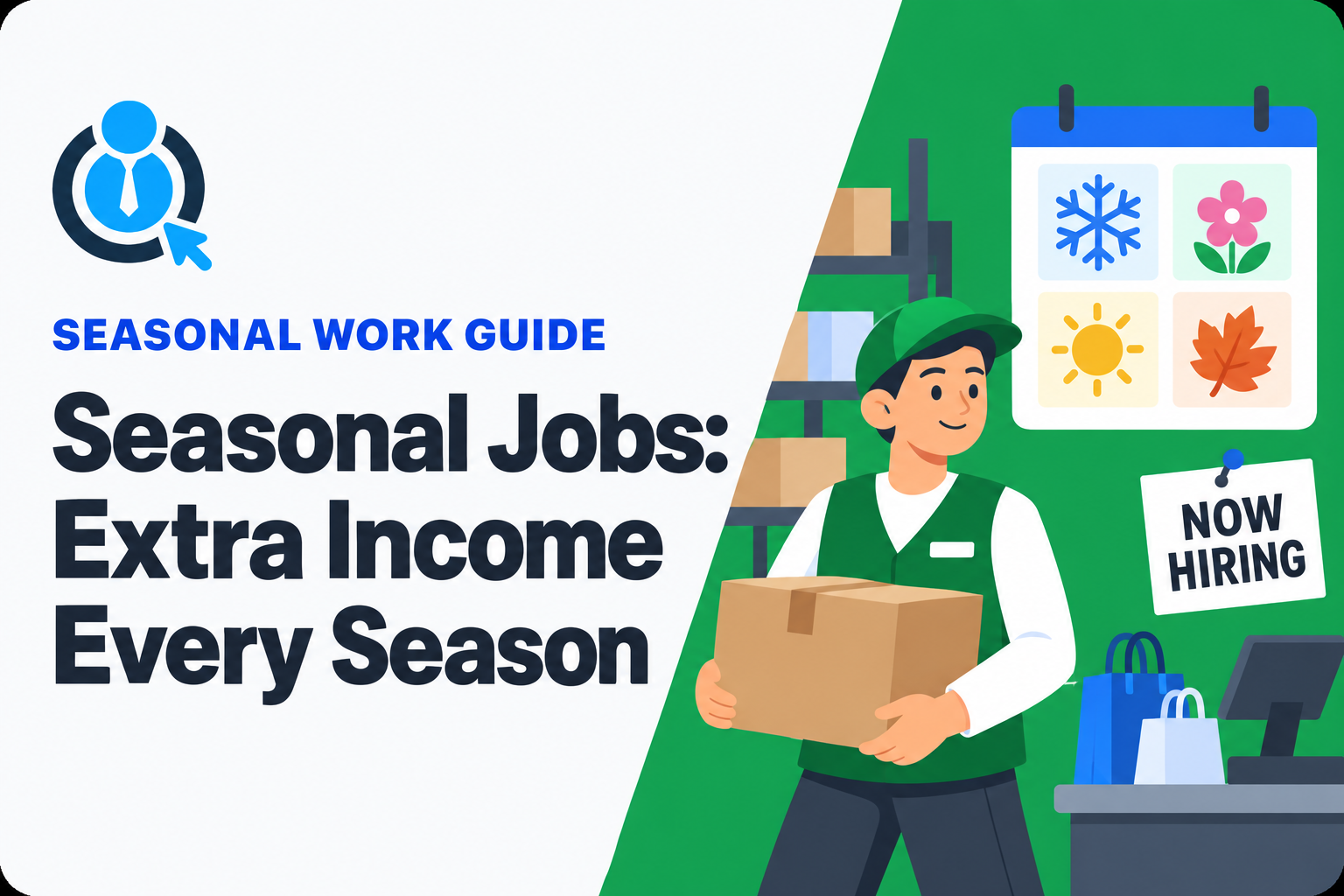
Before sending applications, it helps to understand which roles tend to appear in each season, how hourly pay usually works and what hiring managers may look for.
What Seasonal Jobs Usually Include
Openings vary by time of year, but most fall into a handful of recurring job categories.
- Retail associate: stocking shelves, helping shoppers and running registers during holiday rushes.
- Warehouse and delivery: picking, packing and sorting orders when online shopping peaks.
- Customer service: phone, chat or email support, sometimes offered as remote seasonal jobs.
- Hospitality: hotel, resort and restaurant roles during summer and ski seasons.
- Outdoor and recreation: park staff, lifeguards, camp counselors and tour guides.
- Tax preparation: office, clerical and client support roles from January to April.
- Events and entertainment: ticketing, concessions and setup for festivals and sports venues.
- Agriculture: harvest, packing and farm stand work in late summer and fall.
Many of these positions require little or no prior experience, and on-the-job training is commonly provided in the first few shifts.
Main Benefits of Seasonal Work
Short-term jobs can offer more than a paycheck, especially for people building experience or income.
Fast hiring
Employers facing tight deadlines often move quickly, and interviews may happen within days of applying.
Flexible hours
Part-time and weekend shifts are common, which can fit around school, family or another job.
Extra income
Hourly pay, and sometimes overtime or holiday premiums, may help cover bills or build savings.
Resume experience
A seasonal role adds recent work history and skills that recruiters for permanent jobs tend to value.
Path to permanent roles
Strong seasonal workers are often invited to stay on after the peak or to return the following year.
Who Usually Hires Seasonal Workers
Seasonal hiring comes from a wide mix of employers, from big brands to local shops.
- Large employers: national retailers, shipping carriers and e-commerce fulfillment centers.
- Local businesses: garden centers, tourism operators, farms, restaurants and tax offices.
Staffing agencies also recruit seasonal staff for many of these companies, handling screening, scheduling and payroll on the employer’s behalf.
Worth knowing: legitimate employers do not charge fees to apply, to interview or to start a job.
Who Seasonal Jobs Are Best For
Seasonal work can suit many profiles, especially people who value flexibility over a long-term commitment.
- Students: summer and winter breaks line up well with peak hiring periods.
- Retirees and semi-retired workers: part-time schedules may add income without full-time demands.
- Job seekers in transition: a short contract can bridge the gap while searching for a permanent position.
Parents, freelancers and anyone testing a new industry may also find seasonal roles a low-risk way to try something different.
How Seasonal Hiring Works
The process tends to be simpler and faster than for most permanent positions.
- Application: usually online, with a short form and a basic resume.
- Screening: a quick interview, sometimes followed by a background check.
- Contract: a defined end date, with paid training during the first shifts.
Pay is typically hourly and follows local minimum wage rules, with some employers adding sign-on bonuses or shift differentials.
Advantages and Disadvantages
Like any job format, seasonal work comes with trade-offs worth weighing.
Low entry barrier
Many roles accept beginners and teach the job on site, step by step.
Quick start
Hiring cycles are short, so a paycheck may begin within a few weeks.
Networking
You meet managers who may recommend you for future job openings.
Employee perks
Some employers offer store discounts or easy shift swaps to seasonal staff.
Limited duration
Contracts end after the peak, so income may drop unless you line up the next role well in advance.
Fewer benefits
Health insurance and paid time off tend to be less common for temporary staff than for permanent employees.
Demanding peaks
Holiday and summer rushes can mean long shifts, weekend work and physically demanding tasks on your feet.
Cost, Conditions and Hiring Dates
Applying is free, and hiring follows a fairly predictable yearly calendar.
- Holiday season: hiring often starts in September and peaks in October and November.
- Summer season: recruitment usually runs from March through May.
- Tax season: openings tend to appear in December and January.
- Basic requirements: most roles ask for a minimum age of 16 or 18 and work authorization.
Applying early in each window may improve your chances, since the best shifts and locations tend to fill first.
Why Worklora Recommends Seasonal Work
We follow the job market closely, and seasonal roles remain one of the most accessible ways to earn income on short notice.
They may also serve as a practical first step for people returning to work, changing careers or trying to build solid references quickly.
- Accessibility: few formal requirements for many positions.
- Speed: short hiring cycles compared with permanent jobs.
- Flexibility: both part-time and full-time schedules.
- Growth: a possible route to permanent employment.
What You Can Gain From a Seasonal Job
Beyond the paycheck, a well-chosen seasonal job may bring lasting value to your career path.
- Skills: customer service, teamwork, inventory control and time management.
- References: supervisors who can speak to your reliability.
- Income: extra money for the holidays, school costs or savings goals.
Listing these results clearly on your resume tends to help when applying for your next job, seasonal or permanent.
How to Apply for Seasonal Jobs
Most applications take only a few minutes, and a little preparation can help your profile stand out.
- Prepare: an updated resume, your availability dates and a couple of references.
- Search: filter job listings by “seasonal”, your city and your preferred schedule.
How Seasonal Jobs Compare to Other Options
Seasonal work sits between gig apps and permanent jobs, and each option fits a different goal.
- Gig apps: total schedule freedom, but earnings can be less predictable.
- Temp agencies: steady placements, though assignments may change often.
- Permanent part-time: more stability and benefits, with a longer hiring process.
If you need income soon and are fine with a clear end date, seasonal roles are often a balanced middle ground.
Frequently Asked Questions
How early should I apply for holiday seasonal jobs?
September is usually a good starting point, since many employers finalize their holiday teams by mid-November.
Do seasonal jobs pay overtime?
Seasonal employees are generally covered by the same overtime rules as other hourly workers, depending on local law.
Can a seasonal job become permanent?
It can. Employers often keep reliable seasonal staff after the peak, although this is never guaranteed.
Are there remote seasonal jobs?
Some customer service, tax support and online retail roles can be done from home, especially during the holidays.
Do I need experience to get hired?
Many entry-level seasonal positions include training, so availability and a positive attitude often matter more.
Tips to Make the Most of Your Season
A few simple habits may help turn a short job into a strong opportunity.
- Be available: weekend and holiday availability tends to stand out.
- Be punctual: reliability is often the trait managers remember most.
- Ask for feedback: it helps you improve and shows genuine interest.
- Stay in touch: let your manager know if you would like to return.
Treating the role as a trial for future work may open doors that last well beyond the season itself.
Final Thoughts
Seasonal jobs remain one of the most flexible ways to earn income, gain hands-on experience and explore new industries without a long-term commitment from either side.
The key is timing: knowing when each season hires and applying early tends to give you more choices of role and shift.
It also helps to weigh the trade-offs, such as the fixed end date and fewer benefits, against your personal goals and current financial needs.
With a clear plan, a simple resume and steady effort during the contract, a seasonal role may become a reliable income source or even the start of a new career.

Worklora Editorial Team
Worklora is an independent editorial team that researches jobs, careers and training opportunities. We publish clear, practical guides to help readers understand their options and make informed decisions about work, income and professional growth.
Learn about our work
1 comentário em “ART 1 – Seasonal Jobs: Where Short-Term Work Can Really Pay Off”