
Buying Abandoned Storage Units Online: A Beginner’s Guide to Smarter Bids
Anúncios
When a renter stops paying for a self storage space, the facility may legally sell the contents to recover what is owed.
Those sales now happen mostly online, where anyone can compare abandoned storage units for sale and bid from a phone or laptop.
Below, you will find how the process runs, what it really costs and which mistakes new bidders tend to make.
- Format: timed online auctions of full storage units, sold as-is.
- Coverage: facilities in many US states, with filters by city and zip code.
- Requirements: usually being 18 or older, an account and a payment card on file.
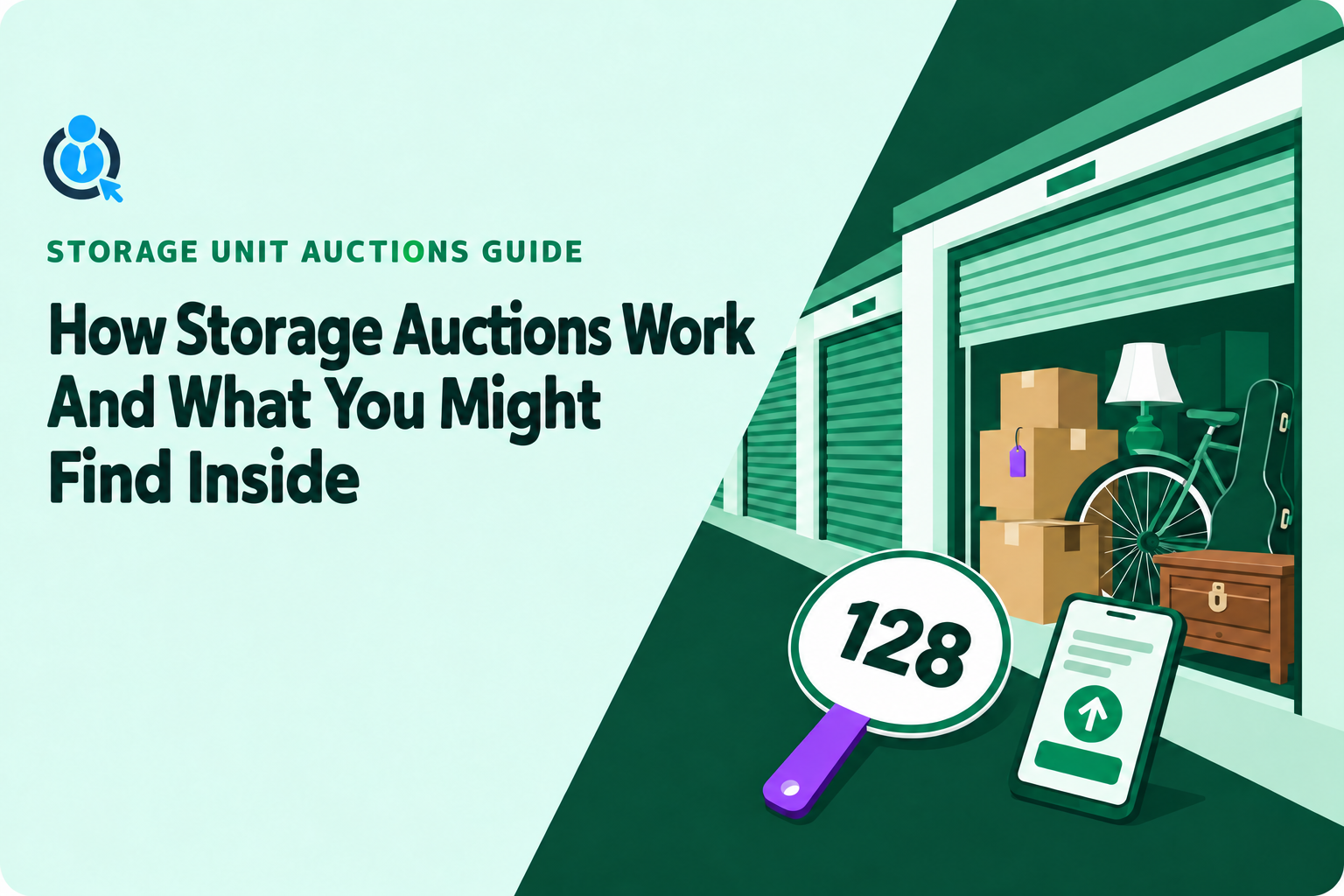
Knowing the journey of a unit, from the first missed payment to the moment a buyer drives away with a loaded truck, makes every listing much easier to read and compare.
From Missed Rent to Final Sale: The Typical Timeline
Although state laws differ, most sales move through a similar chain of events.
- Late payment: the tenant misses rent and the account is marked in default by the facility.
- Lockout: the renter’s access is frequently blocked while late fees keep adding up.
- Legal warning: written notices are sent, and a public announcement of the sale is common.
- Online posting: photos of the open door, unit dimensions and the closing time go live.
- Auction window: registered users compete until the clock hits zero.
- Checkout: the top bidder settles the price, fees and any required deposit.
- Removal: the unit must be emptied within a short period, frequently one to three days.
- Next life for items: goods are kept, donated, recycled or listed for sale by the new owner.
Since each facility can add its own conditions, the fine print on every auction page deserves a careful read before any offer goes in.
Why So Many People Bid on Storage Units
The mix of affordability and surprise is what keeps this market active in towns and cities everywhere.
Whole lots at once
A single bid can cover dozens of items, often lowering the average cost of each piece.
A source for flipping
Resellers may find tools, appliances and décor to list on marketplaces for extra income.
No auction house trips
Browsing, bidding and paying online saves fuel and time compared with live auctions.
Local deals
Searching by zip code tends to surface units close to home, which keeps moving costs lower.
Experience that adds up
With each purchase, bidders usually get better at judging units from a few photos.
Who Is Behind the Listings
Two main players make each online storage auction possible.
- The facility: the storage business that holds the lien and decides the terms of each sale.
- The marketplace: an auction website, such as StorageAuctions.com, that publishes units and processes bids.
According to StorageAuctions.com, the platform has hosted over 100,000 storage auctions since 2014 and keeps listings open in many US states.
Worth remembering: fees, deadlines and deposit amounts may change from one facility to another.
Is This Kind of Buying Right for You?
Storage auctions tend to fit people who enjoy hands-on work and can accept that not every unit will be a winner.
- Side hustlers: anyone building a small reselling business online or at swap meets.
- Budget shoppers: families furnishing a home, garage or workshop for less.
- First-timers: newcomers who want to try with a small unit and a modest budget.
People who need to see each item in detail, or who have no way to transport bulky furniture, may find other buying options more practical.
The Online Process, Step by Step
Bidding online is usually simple, even for people who never joined an auction.
- Find: filter units by location, size and closing time.
- Evaluate: zoom into the photos and read the facility’s terms and fees.
- Offer and close: place your bid, pay if you win and book the pickup.
Setting a price ceiling in advance tends to protect your budget when several bidders compete in the final minutes of an auction.
Advantages and Disadvantages
A balanced view helps you decide whether the risk is worth it for you.
Room for good finds
Useful goods may end up costing far less than buying the same items new.
Constant supply
Fresh units tend to be listed every week, so there is always something to review.
Clear countdown
Current offers and closing times are generally shown on every listing page.
You control spending
Bids can stay small while you learn, then grow as your confidence increases.
Limited visibility
You judge a unit only by what shows in the doorway photos, and what sits in the back may be damaged or worthless.
Fees that add up
Premiums, taxes, deposits and disposal charges can turn an apparently cheap unit into a break-even purchase.
Tight cleanout windows
Hauling everything out in a day or two requires a vehicle, helpers and free space ready ahead of time.
What It Really Costs to Buy a Unit
A realistic budget includes more than the number shown on the auction page.
- Your offer: the final price for everything inside the storage space.
- Platform premium: a percentage that may be charged on top of the winning bid.
- Refundable deposit: held by the facility until the unit is empty and swept.
- Taxes: sales tax may apply, depending on your state and resale status.
Moving truck rental, gas, extra storage and junk removal should also enter the calculation before you decide what a unit is worth.
The Worklora View on Storage Auctions
We see online storage auctions as a legitimate way to find second-hand goods, as long as expectations stay realistic.
TV shows made the market look like a treasure hunt, but in practice most units hold ordinary household items. That is why our team suggests a few simple guidelines for every new bidder:
- Fix a budget that already includes premiums, taxes and removal costs.
- Read the photos closely for furniture, toolboxes, appliances and labeled boxes.
- Secure transport before bidding, so the deadline does not catch you off guard.
- Map where to sell each type of item, online or locally, before the auction ends.
What Regular Bidders Tend to Gain
Besides the goods, frequent buyers usually build knowledge that makes each auction easier than the last.
- Sharper valuation: quicker estimates of what used items sell for in your region.
- Useful contacts: relationships with facility staff, haulers and local buyers.
- Extra earnings: a possible part-time income stream for those who resell.
Outcomes vary widely with effort and market conditions, so the first purchases are best seen as practice rather than profit.
First Steps to Join an Online Storage Auction
Most people can go from zero to their first bid in a short time through the official auction platform.
- Sign up: open an account with your details and add a payment method.
- Browse nearby units: type your zip code to see what is closing soon in your area.
Storage Auctions Versus Other Ways to Buy Used
Several channels offer cheap second-hand goods, each with its own balance of price and certainty.
- Garage sales: you inspect every piece, though the selection is small and random.
- Pawn shops: items are tested, but prices usually include the shop’s margin.
- Returns pallets: bulk retail stock that may arrive broken and requires shipping.
A storage unit bundles many items into one price, which can lower the cost per piece while raising the level of uncertainty.
Common Questions From New Bidders
Why are storage units sold at auction?
Because the renter stopped paying. State lien laws allow facilities to sell the contents to cover the unpaid balance.
Is it possible to inspect items before buying?
Generally not. Buyers rely on listing photos, and touching or opening items before the sale is usually prohibited.
What if I cannot clear the unit in time?
You may lose your cleaning deposit or face extra charges, depending on the facility’s written terms.
Can the former renter get the unit back?
In many states, a tenant can pay the balance before the sale closes, which may cancel the auction.
Should I keep personal items I find?
Photos, IDs and personal records are commonly returned to the facility office so they can reach the owner.
Practical Tips for Your First Units
A few simple choices can make early auctions smoother and less risky.
- Go small first: compact units are generally cheaper and faster to empty.
- Keep a spreadsheet: record costs and sales to measure your real results.
- Check completed sales: sold listings online help estimate realistic prices.
- Pack a kit: gloves, a new lock, tape, bags and moving blankets save time.
With practice, these routines usually make bidding decisions calmer and results easier to predict.
Wrapping Up
Buying abandoned storage units online can be an interesting way to find affordable furniture, tools and reselling stock, especially now that auctions are open to anyone with an internet connection.
The model works because facilities need to recover unpaid rent quickly, and buyers can take whole units at once.
That speed comes with trade-offs, though. You buy what you can see in a few photos and accept that part of the contents may be worth little.
With a firm budget, careful reading of each listing and a plan for transport and resale, new bidders tend to avoid the most common mistakes and enjoy the process more.

Worklora Editorial Team
At Worklora, we write clear and independent guides about online auctions, extra income opportunities and everyday services. Our team checks each topic against reliable sources and updates the content so readers can make informed choices.
Learn about our work